

At PL R&D, we focus on fields that have the potential to unlock transformative new capabilities for humanity. The PL Neuro Focus Area aims to accelerate computing breakthroughs within the fields of neuroscience and neurotechnology.
Advances in neuroscience, brain-computer interfaces (BCIs), biologically inspired AI, and whole-organism emulation are accelerating rapidly. Together, they unlock a future where we can better understand intelligence, restore and expand human capabilities, and build entirely new forms of human-machine interaction. However, the field today remains fragmented: key technical, regulatory, infrastructure, and capital bottlenecks continue to slow progress. We aim to change that.
PL Neuro's mission is to help secure a future of human flourishing by bridging minds and machines in ways that expand human potential while preserving autonomy, dignity, and individual agency.
We focus on three opportunity spaces that could reshape both neuroscience and computing over the coming decade:
- 1Neural Augmentation (Brain-Computer Interfaces)
- 2Biologically Inspired Intelligence (NeuroAI)
- 3Whole Organism Emulation (WOE)
Together, these areas form a loop: advances in neuroscience generate new data and understanding; those insights enable more capable AI systems and neurotechnologies; and progress across both creates entirely new possibilities for augmenting human cognition.
Opportunity Space 1 Neural Augmentation (BCI)
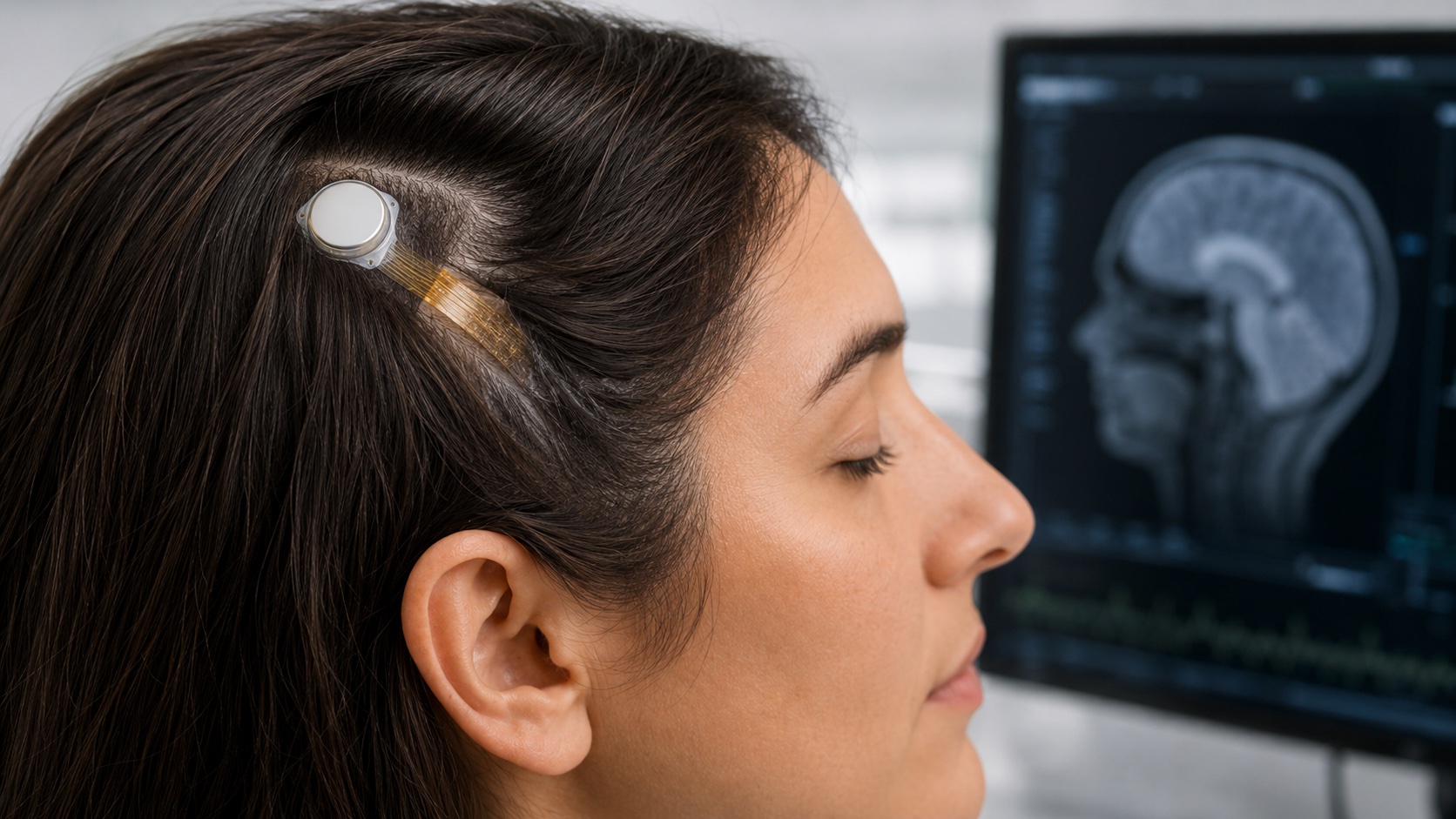
Neural augmentation focuses on building high-bandwidth, bidirectional interfaces between brains and computers.
Near-term applications are therapeutic: restoring communication, movement, and independence for people living with paralysis or neurological conditions. Longer-term, these same technologies may enable entirely new forms of interaction, communication, and cognition.
Why it matters
BCIs have already demonstrated life-changing benefits in clinical settings. The next challenge is moving from isolated medical devices to scalable platforms that support broad innovation.
Key areas of interest include:
- Higher-bandwidth neural interfaces
- Less invasive and more scalable devices
- Improved implantation and deployment infrastructure
- Open software ecosystems built on safe, secure neural hardware
Progress so far / case studies of momentum
- Bandwidth — Paradromics Receives FDA Approval for the Connect-One Clinical Study with the Connexus® Brain-Computer Interface
- Less Invasive — FDA clears Precision Neuroscience's minimally invasive brain-computer interface implant
Clinical BCI Superpower
Brain-computer interfaces will demonstrate major improvements to the quality of life and capabilities of clinical patients — some of which will exceed the capabilities of healthy individuals.
The BCI App Store
We believe a major catalyst will occur when BCIs transition from vertically integrated medical products into open platforms. A standardized software layer that allows third-party developers to build applications on top of approved BCI hardware could dramatically increase the utility of neural interfaces. Just as smartphones became more valuable through app ecosystems, BCIs could unlock a wave of innovation once many developers can deploy neural augmentations through scalable software deployments.
Opportunity Space 2 Biologically Inspired Intelligence (NeuroAI)
NeuroAI seeks to use insights from biological intelligence to build more capable, efficient, and accessible AI systems.
Rather than treating the brain as merely an object of study, NeuroAI treats it as a source of architectural, representational, and algorithmic inspiration.
Why it matters
Modern AI carries enormous computational and energy cost.
Brains demonstrate that intelligence can emerge from systems that are dramatically more efficient than today's machine learning architectures. Understanding how biological intelligence works may help unlock the next generation of AI.
Areas we find particularly promising include:
- Large-scale neural data collection and analysis
- Neural foundation models
- Brain-inspired learning algorithms
- Neuromorphic hardware and efficient computing architectures
Progress so far / case studies of momentum
- Large-scale neural data — The MICrONS Project
- Neural foundation models — Introducing TRIBE v2: A Predictive Foundation Model Trained to Understand How the Human Brain Processes Complex Stimuli
Neural Distillation
One potential breakthrough is the emergence of methods that directly align AI systems with human neural activity. If neural recordings can help models learn more efficiently, or think in ways that better reflect human cognition, neural data could become a foundational resource for AI development. A specific inflection point would be 100,000,000 hours of human neural data recorded across cognitive tasks and recording device types.
The Neuromorphic Energy Pivot
A second possibility is that energy constraints push the AI industry toward biologically inspired hardware and algorithms. If brain-inspired systems achieve orders-of-magnitude improvements in efficiency vs current hardware or software designs, neuroscience could become a core driver of future AI progress.
Opportunity Space 3 Whole Organism Emulation (WOE)
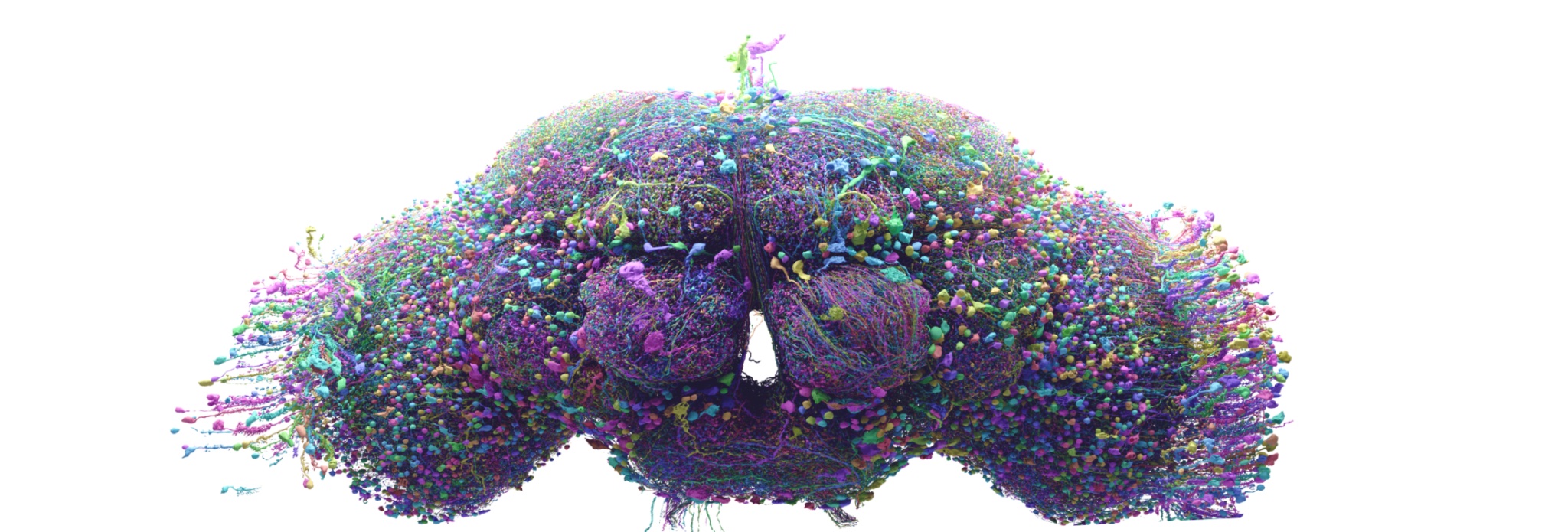
Whole organism emulation seeks to create computational models that reproduce the behavior of biological organisms using detailed neural and biological data.
While often discussed as science fiction, the field is increasingly becoming an engineering challenge shaped by advances in connectomics, imaging, simulation, and neuroscience.
Why it matters
A successful emulation system would provide an unprecedented tool for understanding intelligence, learning, memory, and behavior.
It could also dramatically accelerate neuroscience by enabling experiments that are difficult (or impossible) to perform in living systems.
Promising areas include:
- High-throughput connectomics
- Brain reconstruction pipelines
- Neuromechanical simulation
- Memory and behavior modeling
Progress so far / case studies of momentum
Three major constraints sit between a fixed brain and a running simulation: how much tissue can be imaged, how much human labor reconstruction takes, and whether structural data is sufficient to specify function. Significant progress has been made against all three constraints in the past year.
On imaging, moving off electron microscopy changes the cost curve. A team at the Institute of Science and Technology Austria published a light-microscopy pipeline that expands tissue roughly 16-fold. Light microscopes are cheaper and far more widely installed than electron microscopes, and the method leaves room for molecular labels that electron microscopy cannot read.
On reconstruction, the binding cost at mouse scale is human proofreading hours. Janelia's PATHFINDER pipeline reports 94.2% normalized expected run length for exhaustive axon reconstruction and an 84-fold reduction in projected proofreading cost against prior work.
On sufficiency, the field's hardest open question is whether a connectome constrains dynamics tightly enough to simulate. A recent preprint proposes an ultrastructure-to-dynamics compiler. If mappings like this hold, molecular annotation plus a connectome becomes enough to parameterize a simulation.
Memory Retrieval in Simulation
The most catalytic milestone may be surprisingly simple. If a reconstructed mouse brain can be simulated and reliably reproduce a learned behavior or memory from its biological counterpart in a virtual environment, whole-organism emulation moves from speculation to demonstration. Such a result would establish a concrete benchmark for the field and fundamentally change how researchers, funders, and policymakers view the possibility and impact of emulation.
PL Neuro: Building the Neurotech Field
Breakthroughs do not emerge from technology alone. They require healthy ecosystems that connect research institutions, domain experts, capital allocators, startup founders, and more.
Today, neurotechnology faces fragmentation across disciplines, institutions, and stakeholder groups. Researchers, founders, funders, policymakers, and engineers often operate in separate communities despite working toward related goals.
Building the field itself is therefore a critical leverage point. Our field-building strategy centers on:
- Shaping field narrative, identity, momentum, and alignment
- Developing shared milestone targets, roadmaps, benchmarks, and success criteria
- Connecting talent networks and catalyzing cross-disciplinary collaborations
- Advancing principles for human-flourishing such as privacy, governance, openness, and agency
- Increasing public understanding and institutional engagement
A stronger ecosystem increases the likelihood that advances in BCI, NeuroAI, and emulation reinforce one another rather than developing in isolation.
Looking Ahead
The coming decade could determine whether neurotechnology remains a niche scientific endeavor or becomes one of the defining technological frontiers of the century. We believe the field is approaching several important inflection points:
- 10,000 invasive high-bandwidth neural implants in humans
- 100,000,000 hours of human neural data
- A whole brain mouse connectome completed
Reaching them will require coordinated effort across research, entrepreneurship, policy, infrastructure, and capital. PL R&D exists to help accelerate that coordination.
Get Involved
We're actively building relationships with researchers, founders, funders, policymakers, and technologists working across neurotechnology, NeuroAI, connectomics, and related fields.
If you're interested in contributing to the future of neurotechnology, we'd love to hear from you: research@protocol.ai.
Follow PL R&D and Protocol Labs for future publications, field maps, convenings, and opportunities to participate in the ecosystem as it continues to grow.
This post is for informational purposes only. It is not an offer, solicitation, or recommendation of any security or investment product, and nothing here is a commitment or guarantee of any future performance or any outcome.